
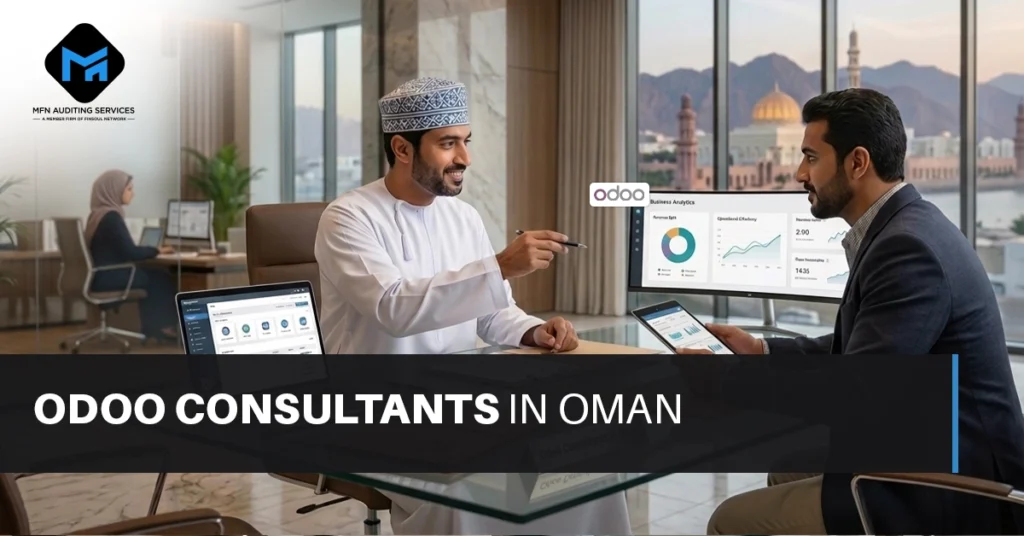
Running a business in Oman often feels smooth at the start, but things change once daily operations grow. Records get scattered, reports take longer to prepare, and finance teams spend extra hours fixing small errors. Many companies still depend on manual systems or disconnected tools that do not talk to each other. This slowly creates confusion in stock, accounting, and overall decision-making. Growth becomes harder when data is not clear or updated on time.
MFN Auditing helps businesses move away from this confusion by bringing structure through Odoo consulting. The focus is on setting up systems that match real business work in Oman. This makes daily tasks simpler, improves accuracy in reports, and helps teams stay in control without extra effort.
Why Businesses in Oman Struggle with ERP Systems?
Many businesses in Oman still rely on manual spreadsheets to handle daily operations. This slows everything down and creates gaps between departments. Finance teams often wait longer for reports, and this delay affects decision-making. VAT filing becomes even more stressful when data is scattered or entered incorrectly.
Small errors turn into bigger issues during compliance checks under Oman’s tax rules. Another common issue is disconnected systems where HR, finance, and sales tools do not work together. Information stays locked in separate places, so teams struggle to get a clear view of the business. This mix of delays and errors makes growth harder and puts pressure on daily operations.
What Do Odoo Consultants in Oman Actually Do?
Odoo consultants help businesses turn scattered systems into one working setup. Their role is not only technical work but also understanding how a company runs every day.
- Business workflow analysis: Consultants study how sales, accounts, and inventory move inside the company. This helps shape a system that fits daily work and removes confusion in operations.
- ERP setup based on Oman operations: The system is built around how businesses in Oman function. Local reporting needs and compliance rules are added during setup for better control.
- VAT and payroll configuration: Oman tax rules are applied inside the system. Payroll structure is set so salaries, deductions, and filings stay correct and aligned with regulations.
- Data migration from old systems: Information from spreadsheets or old software is shifted into Odoo. This keeps business history safe and ready for use in one place.
- Staff training and system support: Employees are guided on how to use the system in daily tasks. Support is given so teams can work smoothly after launch.
Odoo Implementation Process in Oman
Odoo setup is not a single action. It moves step by step so the system matches how the business really works in Oman. Each stage builds clarity and reduces errors in daily operations.
Step 1: Business Process Review
Experts first study how the company runs sales, finance, and inventory. This step matters because it shows real gaps in current work and avoids building the wrong system.
Step 2: ERP Design for Oman Operations
A structure is planned based on the Oman business needs. This matters because local rules like VAT reporting and business flow must fit inside the system from the start.
Step 3: System Setup and Customization
Odoo modules are configured and adjusted for company use. This step matters because it shapes how smoothly daily tasks will run after launch.
Step 4: Data Transfer from Old Systems
Old records are moved from spreadsheets or earlier tools into Odoo. This matters because clean data keeps reporting accurately and prevents future confusion.
Step 5: Training and Live Support
Teams learn how to use the system in real work situations. This matters because proper training helps avoid mistakes and builds confidence during daily use.
Key Industries Using Odoo in Oman
Different business sectors in Oman use Odoo to handle daily work in a more organized way. Each industry uses it based on its own operations and reporting needs.
- Retail and supermarkets: Shops use Odoo to track stock, manage sales, and avoid item shortages. It also helps keep pricing and billing clear during daily customer sales.
- Construction companies: Project-based work becomes easier to track. Companies manage costs, materials, and job progress in one system instead of scattered records.
- Logistics and supply chain: Movement of goods is tracked from start to end. This reduces delays and helps teams know where shipments and stock are at any time.
- Trading businesses: Import and export companies use Odoo to manage invoices, suppliers, and inventory. It helps keep financial records clear during high-volume transactions.
- Service companies: Agencies and service providers manage clients, billing, and work schedules. This brings more structure to daily operations and improves follow-ups.
Odoo vs Traditional Systems in Oman
Many businesses in Oman still depend on older tools. These systems work, but they slow things down when data grows. Odoo brings everything into one connected system, which changes daily work in a clear way.
| Comparison Area | Excel vs Odoo | Legacy ERP vs Odoo | Manual Accounting vs Automated ERP |
| Cost | Low start but high effort over time | High setup and maintenance cost | Low tools cost but high workload cost |
| Speed | Slow when data increases | Faster than Excel, but still rigid | Very slow due to manual entry |
| Reporting accuracy | High chance of human errors | Better accuracy, but it depends on system limits | Errors often happen in calculations |
| Scalability | Hard to scale with business growth | Limited flexibility in many cases | Not suitable for growing businesses |
Older systems need more manual effort as the business grows. Odoo keeps all data connected, which helps teams work faster and reduce mistakes in daily operations.
Common Mistakes Businesses Make When Hiring Odoo Consultants
Many companies rush the hiring decision and end up facing system issues later. Small choices at the start can create long-term problems in ERP setup. These mistakes often come from a lack of planning or unclear expectations. A careful selection process can save both time and cost.
- Choosing price over expertise: Many businesses pick the lowest cost option. This often leads to a weak setup and poor system performance later.
- Skipping requirement analysis: Some companies do not clearly explain their needs. This results in a system that does not match real daily operations.
- Over-customizing the system: Too many changes in Odoo can make it complex. This reduces speed and creates problems during updates.
- Ignoring staff training: Teams are not trained properly in many cases. This leads to errors and slow adoption after the system goes live.
- No focus on post-implementation support: Some businesses forget about ongoing help. Without support, small issues turn into bigger operational delays.
How to Choose the Right Odoo Consultant in Oman?
Selecting the right consultant can determine how smoothly your ERP system works after setup. Many businesses face issues later because the selection is rushed or based only on price. A careful check at the start helps avoid system problems and delays.
- Certified partner or not: Check if the consultant is officially linked with Odoo. Certification shows they follow proper system standards and updated practices.
- Oman VAT experience: The consultant should understand VAT rules in Oman. This helps avoid errors in tax setup and reporting during financial operations.
- Industry experience: Experience in your business type matters. A consultant who has worked with similar companies can design a more practical system.
- Post-launch support: System work does not end after setup. Ongoing support is needed to fix issues and guide teams during real usage.
- Customization control: Too many changes can slow the system. A good consultant keeps customization balanced so the system stays stable and easy to manage.
Cost of Hiring Odoo Consultants in Oman
Cost depends on business size, system needs, and level of customization. Small businesses in Oman usually spend around OMR 1,000 to OMR 3,000 for basic Odoo setup with limited modules like accounting and sales. Mid-size companies may invest between OMR 3,000 to OMR 10,000 because they need more features such as inventory, HR, and reporting tools. Enterprise projects can go beyond OMR 10,000 when advanced customization, multiple departments, and complex workflows are involved.
Pricing also changes based on training and support after launch. Some consultants charge monthly support fees ranging from OMR 100 to OMR 500. Clear planning at the start helps avoid hidden costs and keeps the project aligned with real business needs in Oman.
Struggling to choose the right Odoo setup for your business in Oman?
Struggling to choose the right Odoo setup for your business in Oman? Many companies face confusion when systems don’t match daily work or when setup is done without proper planning. A clear approach can save time, reduce errors, and keep operations smooth across finance, sales, and inventory.
MFN Auditing helps businesses in Oman set up accounting softwares simply and practically. The focus is on building systems that fit real operations, improve reporting, and support better decisions without extra complexity.
Email: info@mfnauditing.com
Phone: +968 7733 8545
Conclusion
Odoo consulting in Oman is not just about installing software. It is about building a system that fits how a business works every day. Many companies face delays, reporting issues, and disconnected processes when systems are not planned properly. A clear setup with the right consultant helps reduce these problems and keeps operations more stable and organized. Careful decisions at the start can save both time and cost later.
MFN Auditing supports businesses in Oman with practical Odoo setup and guidance. We focus on simple systems that match real work needs and help companies grow with clarity.
FAQs
What do Odoo consultants in Oman actually do?
They design and set up Odoo systems based on business needs, including finance, sales, inventory, and compliance.
Is Odoo suitable for small businesses in Oman?
Yes, it works well for small businesses because it can start simple and grow as the business expands.
How long does Odoo implementation take in Oman?
It usually takes a few weeks to a few months, depending on company size and system complexity.
Does Odoo support Oman VAT requirements?
Yes, it can be configured to handle VAT reporting and compliance based on the Oman tax rules.
Why do businesses hire Odoo consultants instead of setting it up themselves?
Consultants help avoid errors, set up the system correctly, and match it with real business operations.