
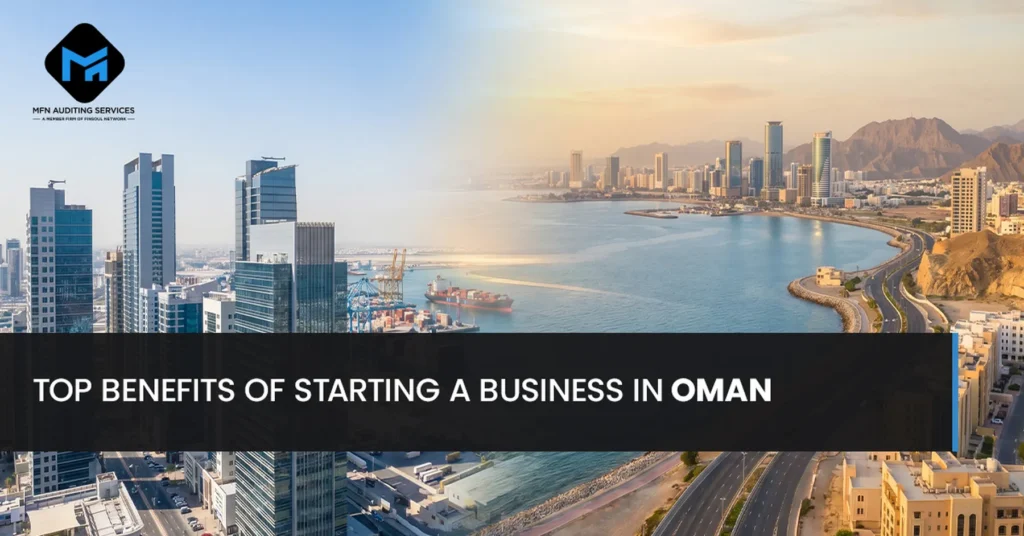
There is a reason investors from across the Gulf, South Asia, and beyond are quietly setting up shop in Oman right now. It is not just geography. It is not just oil wealth. It is the deliberate, policy-driven transformation of an entire economy into one of the most business-friendly environments in the Middle East and it is happening right now, in real time. At MFN Auditing, we work with entrepreneurs and investors navigating this landscape every day. What we see on the ground confirms what the numbers already show: Oman in 2026 is one of the most strategically sound places to build a business in the entire region.
Oman’s Vision 2040 is not just a government slogan it is reshaping sectors, simplifying registration, relaxing foreign ownership laws, and creating real financial incentives for businesses that choose to establish here. If you have been sitting on the fence about starting a business in Oman, what follows may be the clarity you need.
Why Oman? Why Now?
Oman’s timing as a business destination could not be better. The Sultanate spent years building the legal and infrastructural groundwork for private sector-led growth. In 2026, the results of that groundwork are visible and measurable.
The business environment has been deliberately restructured foreign ownership rules loosened, digital registration portals launched, free zones expanded, and sector-specific incentives introduced across manufacturing, tourism, logistics, technology, and renewable energy.
This is not a country waiting for investment. It is a country actively engineering conditions for investors to succeed.
Top Benefits of Starting a Business in Oman
1. 100% Foreign Ownership No Local Partner Required
This one changed everything.
Before the Foreign Capital Investment Law (Royal Decree 50/2019), foreign investors were required to partner with an Omani national, typically handing over a significant ownership stake just to enter the market. That requirement has been fundamentally reformed.
Today, foreign investors can own 100% of a Limited Liability Company (LLC) or Single Person Company (SPC) across a wide range of commercial and professional activities with no local partner needed. The Ministry of Commerce, Industry, and Investment Promotion (MOCIIP) governs this process, and the path to full ownership is now a matter of meeting the right activity codes, not negotiating equity with a local sponsor.
For entrepreneurs and corporations alike, this single reform transformed Oman’s investment appeal overnight. You own your business. Fully. Legally. Without compromise.
2. Zero Personal Income Tax
Here is a benefit that directly impacts what you take home.
Oman imposes no personal income tax on individuals. Whether you are a business owner drawing a salary, an executive receiving bonuses, or a high-earning professional your personal income is not taxed by the Omani government.
Combined with a 15% Corporate Income Tax rate (competitive within the GCC) and zero restrictions on repatriation of capital, dividends, or profits, the financial structure in Oman is genuinely favourable. You earn here. You keep here. And you can move your money freely no gates, no penalties, no bureaucratic friction standing between you and your returns.
3. Free Zones With Up to 30 Years of Tax Exemption
Oman’s free zones are among the most compelling investment propositions in the region. The Special Economic Zone at Duqm (SEZAD), the Sohar Free Zone, and the Salalah Free Zone each offer a distinct set of incentives but all share the same core advantage: dramatically reduced costs of doing business.
Key free zone benefits include:
- Corporate tax holidays of up to 30 years in qualifying zones
- Full customs duty exemptions on imports and exports
- 100% foreign ownership without restriction
- Unrestricted profit repatriation
- Relaxed Omanisation requirements compared to mainland business
Duqm attracts investors in metal, steel, food, and logistics. Sohar is strategically positioned for manufacturing and industrial operations. Salalah draws chemical and material processing businesses with cost-competitive infrastructure.
If your business model involves manufacturing, logistics, or export-oriented trade, a free zone setup in Oman can fundamentally change your cost structure and your bottom line.
4. Strategic Location Between Three Continents
Look at a map. Oman sits at the intersection of the Middle East, South Asia, and East Africa with direct maritime access to global shipping lanes through the Arabian Sea and the Gulf of Oman.
The Port of Sohar and the Port of Salalah are world-class logistics hubs. Salalah, in particular, is one of the largest transhipment ports in the region, ranking at the top in the Middle East for port development. Oman’s road networks, airports, and digital connectivity with 4G/5G coverage reaching 99% make it a genuine operations base, not just a registration address.
For businesses in trading, logistics, import-export, and supply chain management, this location is not incidental. It is a core competitive advantage that no tax break can manufacture. Nature built it. Oman built around it.
5. A Stable, Business-Friendly Regulatory Environment
Political instability is one of the highest-risk factors for any business investment. Oman consistently ranks as one of the most politically stable countries in the Arab world with a long history of peaceful governance and a transparent legal system that treats foreign investors with what the law itself describes as “national treatment”: the same rights and protections extended to Omani citizens.
Regulatory processes have also been significantly streamlined. Company registration, licensing, and approvals now run through digital portals, reducing both processing time and bureaucratic friction. The government has actively committed to making setup faster, clearer, and less dependent on intermediaries. Company registration now typically takes between three to seven working days a timeline that would have been unthinkable a decade ago.
6. A Growing Economy Actively Diversifying Beyond Oil
Smart investors do not just look at today’s market they look at where an economy is heading.
Oman’s Vision 2040 strategy is one of the most ambitious economic diversification plans in the Gulf. It is shifting the economy’s centre of gravity away from oil and into logistics, tourism, manufacturing, ICT, renewable energy, and most recently artificial intelligence. In April 2026, Oman announced the creation of a Special Artificial Intelligence Zone in Muscat, with free zone incentives specifically designed to attract AI-driven businesses.
The target: a 10% contribution of the digital economy to GDP by 2040. For investors entering today, that trajectory represents extraordinary growth potential across multiple sectors. Manufacturing companies can receive tax exemptions for up to 10 years. Tourism and agriculture projects may qualify for 5-year exemptions. Businesses investing in less-developed governorates receive enhanced incentives on top of standard benefits.
Getting in early in a diversifying economy is not a risk. It is a strategy.
7. A Skilled, Educated, and Affordable Workforce
Building a business requires people and Oman offers a labour market that is increasingly well-suited to knowledge-economy demands.
Oman has a literacy rate of nearly 98%, with 70% of graduates trained in STEM disciplines. The government continues to invest in vocational and technical education aligned with the sectors prioritised under Vision 2040. English is widely spoken in business contexts, reducing communication friction for international companies.
Labour costs also remain competitive relative to other GCC markets, particularly in the free zones where Omanisation requirements are more flexible. The talent is there. The infrastructure to support them is there. And the cost of accessing both remains well within reach.
8. Simplified Company Formation With Multiple Legal Structures
Oman does not force investors into a one-size-fits-all structure. Depending on your business model, scale, and objectives, you can choose the legal entity that genuinely fits:
- Limited Liability Company (LLC): The most common choice for foreign investors. Allows 100% foreign ownership in approved sectors, suits trading, services, and general operations.
- Single Person Company (SPC): Ideal for solo founders. Full foreign ownership, growing rapidly in popularity.
- Branch Office: For companies already registered abroad seeking an Omani presence without incorporating a separate entity.
- Free Zone Entity: Purpose-built for businesses seeking maximum tax and regulatory advantages.
The Invest Easy portal has made name reservation, registration, and licensing largely digital removing much of the manual back-and-forth that used to delay company formation. Structure smartly from the start, and the rest of the journey becomes significantly smoother.
The Real Cost of Getting Started Without the Right Guidance
Here is something many first-time investors in Oman discover too late: the process looks straightforward until you encounter the details. Activity codes determine which sectors allow full foreign ownership. Sector-specific regulatory clearances operate on a separate track. Free zone incentive structures vary significantly between Duqm, Sohar, and Salalah. And compliance obligations VAT registration, audit requirements, corporate income tax filings begin from the moment your company is active.
Missing a step, selecting the wrong activity code, or misunderstanding your compliance calendar creates delays, added costs, and unnecessary exposure.
This is precisely where MFN Auditing makes a measurable difference. With deep expertise in Oman’s regulatory and financial landscape, MFN Auditing helps businesses navigate company formation, structure their operations for maximum efficiency, and ensure full compliance from day one. Whether you are a foreign investor setting up your first Omani entity or an existing business looking to expand into a free zone, the team brings practical, jurisdiction-specific knowledge that protects your investment and your time.
What Sectors Offer the Most Opportunity Right Now?
Given Oman’s Vision 2040 trajectory and current government incentive priorities, several sectors stand out for new business entrants in 2026:
- Logistics & Trade: Oman’s port infrastructure and GCC access make it a natural base for trading and distribution businesses.
- Tourism & Hospitality: Government-backed development and integrated tourism complexes (ITCs) opening real estate investment to foreign participation.
- Renewable Energy: Solar and wind energy programmes backed by favourable regulations for foreign entities.
- Technology & AI: The newly announced AI Special Zone in Muscat offers a ground-floor opportunity in one of the most actively incentivised sectors in Oman.
- Manufacturing: Tax holidays of up to 10 years, competitive land lease rates, and free zone infrastructure create strong economics for industrial operations.
Start Right. Start Informed.
The businesses that succeed in Oman are not necessarily the biggest or best-funded they are the ones that entered the market correctly, with the right legal structure, the right compliance framework, and the right professional support from day one.
MFN Auditing works with entrepreneurs and corporations at every stage of the business formation journey in Oman. From initial structure advisory and free zone evaluation to audit, accounting, and ongoing tax compliance, the team is equipped to support your business from formation through growth.
If you are serious about starting a business in Oman, the smartest first call is to someone who already knows the landscape.
Contact MFN Auditing today and let’s build your Oman business story the right way.
Frequently Asked Questions
Can a foreigner own 100% of a business in Oman?
Yes, under Royal Decree 50/2019 foreigners can own 100% in most sectors. Some regulated activities still need special approvals.
How long does it take to register a company in Oman?
With proper documents, registration takes 3–7 working days via Invest Easy. Regulated sectors may take longer due to extra clearances.
Is there a minimum capital requirement to start a business in Oman?
Standard LLCs with Omani partners have no minimum capita. Foreign-owned LLCs and free zones may require higher amounts.
Do I need to be physically present in Oman to register a company?
Most steps can be done remotely through the digital portal. Bank accounts or certain approvals may need local presence.
What taxes does a business in Oman have to pay?
Corporate Income Tax is 15% and VAT is 5% for registered firms. Free zones may offer long-term corporate tax exemptions.